
Promoting events on social media does not start with spending on ads before you know what works. Still, many business owners in Bali pay for exposure while missing out on the free reach they could build first.
Effective event promotion follows a clear order. Start by building interest with content your audience already trusts, then add a small, targeted budget to what is already performing. This guide covers how to do both without overspending.
Why Event Promotion Budgets Get Wasted
Most wasted spend isn’t caused by the platforms, but by how you manage the budget. Knowing the main reasons budgets get wasted helps you avoid these mistakes before you spend anything.
A common source of waste is boosting posts that were not engaging to begin with. Paid promotion only extends what is already there, so if a post is weak, it just reaches more people who do not respond. Dividing a small budget across too many platforms creates the same issue, leaving each with too little to make an impact. A strong event campaign spends carefully, learns from real engagement, and increases spend only where results justify it.
Which Social Platforms Are Worth Your Time and Money
You do not need to be everywhere. Focusing on one or two channels with a consistent presence will outperform spreading yourself thin across all platforms. Choose based on where your audience is active and where your content fits best.
Instagram is best for visual build-up using Stories and Reels, making it ideal for behind-the-scenes content and countdowns. Organic reach for static posts is dropping, so short videos now get more attention than photos. Paid spend is only worth adding once a Reel or Story is already performing well on its own.
Facebook is still the top platform for local event discovery, thanks to its Events feature. Organic reach on regular Page posts is low, averaging about 2.2 per cent of followers, so one post is rarely enough. A small retargeting budget focused on people who engaged with your Event listing is usually a good investment.
TikTok
TikTok offers the highest organic reach potential, since the For You feed can show your clips to people who don’t follow you. Authentic, behind-the-scenes videos work better than polished ads, which fits event build-up. Because results are unpredictable, use TikTok as a low-cost awareness channel before spending on ads.
LinkedIn works best for professional or industry events where attendance builds credibility. Posts from speakers’ personal profiles have more impact than branded ads and are free to publish. You rarely need a paid budget at the start, so rely on organic reach and save spend for later reminders.
Where Your Audience Actually Spends Time
The only platform that matters is where your audience already spends time. A luxury retreat and a community workshop will not have the same followers, so check where your current audience engages before you try to cover every channel. Focusing on one or two channels with intent will make your time and budget go further.
Get the Most From Free Organic Reach
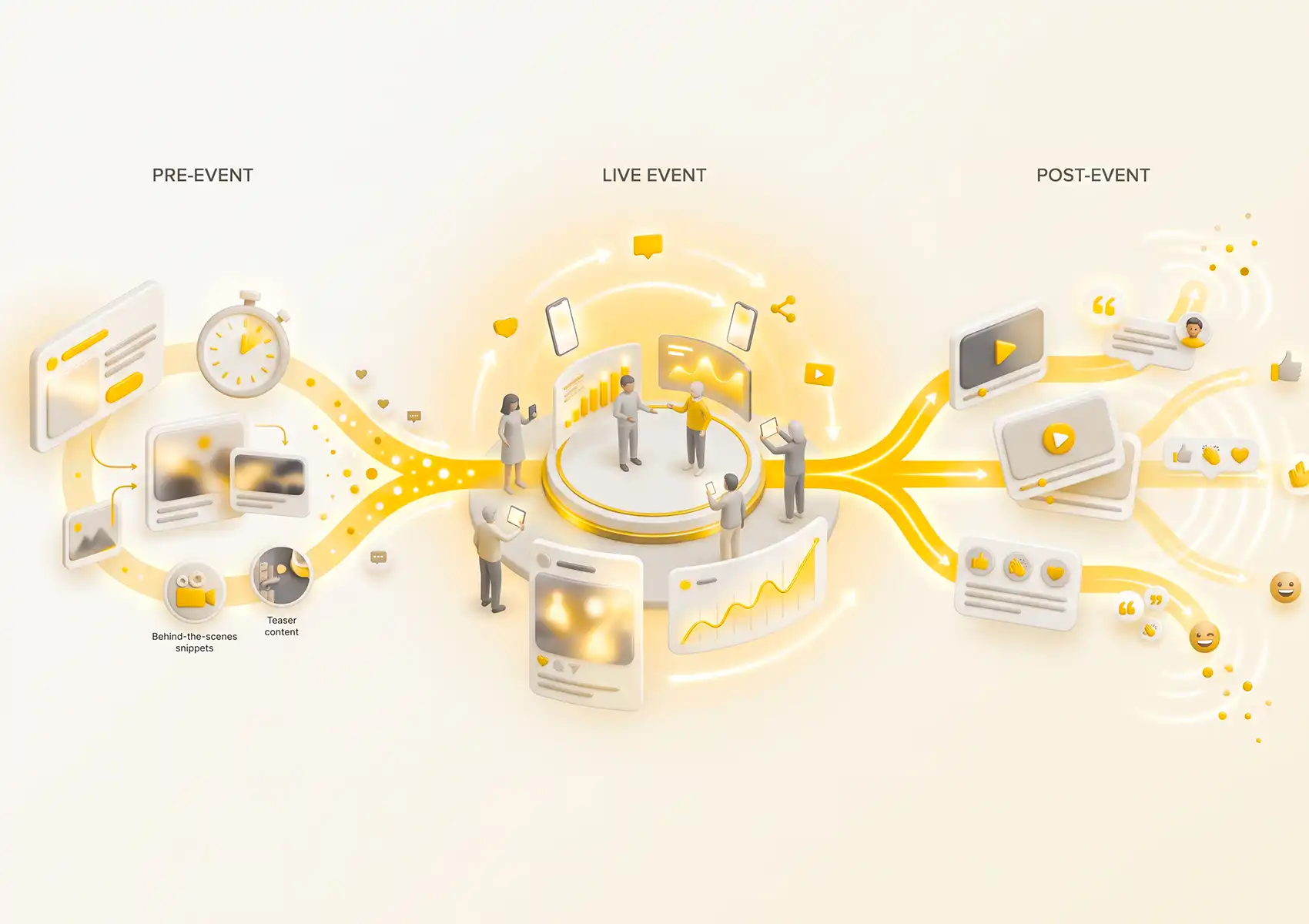
Most event momentum comes from free reach, which only costs your time and focus. To promote events on social media without overspending, spread your effort across the entire event. Plan your content in three phases instead of posting once and hoping for results.
Build Anticipation Before the Event
Start two to three weeks before the event with teasers, countdowns, and a clear reason to attend beyond the date. Use countdown stickers in Stories and encourage early sign-ups to share with their own followers. Building anticipation makes later reminders feel helpful, not intrusive.
Post Live During the Event
Posting during the event in real time shows attendees what they are part of and gives others a reason to pay attention. Short, unedited clips of the room, speakers, and crowd usually perform better than polished videos. This live content also becomes valuable proof for your next event promotion.
Keep Sharing After the Event
The event continues after the room is empty. Recaps, testimonials, and highlight clips keep building interest for weeks and provide proof for your next event. This after-event content is often your most cost-effective marketing asset.
Spend Paid Budget Only Where It Earns Its Place
Paid promotion is useful, but it should amplify what is already working, not be your first step. Once you see which content gets organic engagement, use a small paid budget to reach new people. Spend with purpose and let your results guide your next move.
Boost Your Strongest Organic Post
Identify the post already getting the most saves, shares, and comments, and put your budget behind it instead of guessing. Testing with Rp150.000 to Rp300.000 per day for five to seven days gives the platform enough data to optimise delivery. Spending too little for just a day or two usually wastes your budget instead of saving it.
Run a Small Test Before Scaling
Use your first paid spend as a test, not a long-term commitment. Try a one-week trial with about Rp1.500.000 on your top-performing post to see if paid social is worth scaling for your audience. If the results are good, increase slowly. If not, your risk stays low.
Mistakes That Quietly Drain Your Budget
Certain habits quietly waste money without being obvious. Spotting these early keeps your paid budget focused on what actually drives attendance.
- Boosting a weak post. Paid reach amplifies content, so promoting something people already ignore just pays to have more people scroll past.
- Posting once and stopping. A single announcement rarely reaches enough of your followers, given how low organic reach now sits.
- Splitting a small budget across every platform. Thin spend on four channels learns nothing, whilst a focused budget on one can find its audience.
- Starting too late. Waiting until the event week leaves no time to build anticipation or test what works.
- Using identical content everywhere. Each platform rewards a different format, so copying and pasting undercuts your reach on all of them.
Plan a Cost-Efficient Event Campaign With Gaia Digital Agency
Promoting events on social media without overspending comes down to putting organic reach first and paid budget second. Let’s start with a conversation about how to structure your next event campaign to earn attendance without wasted spend.


