
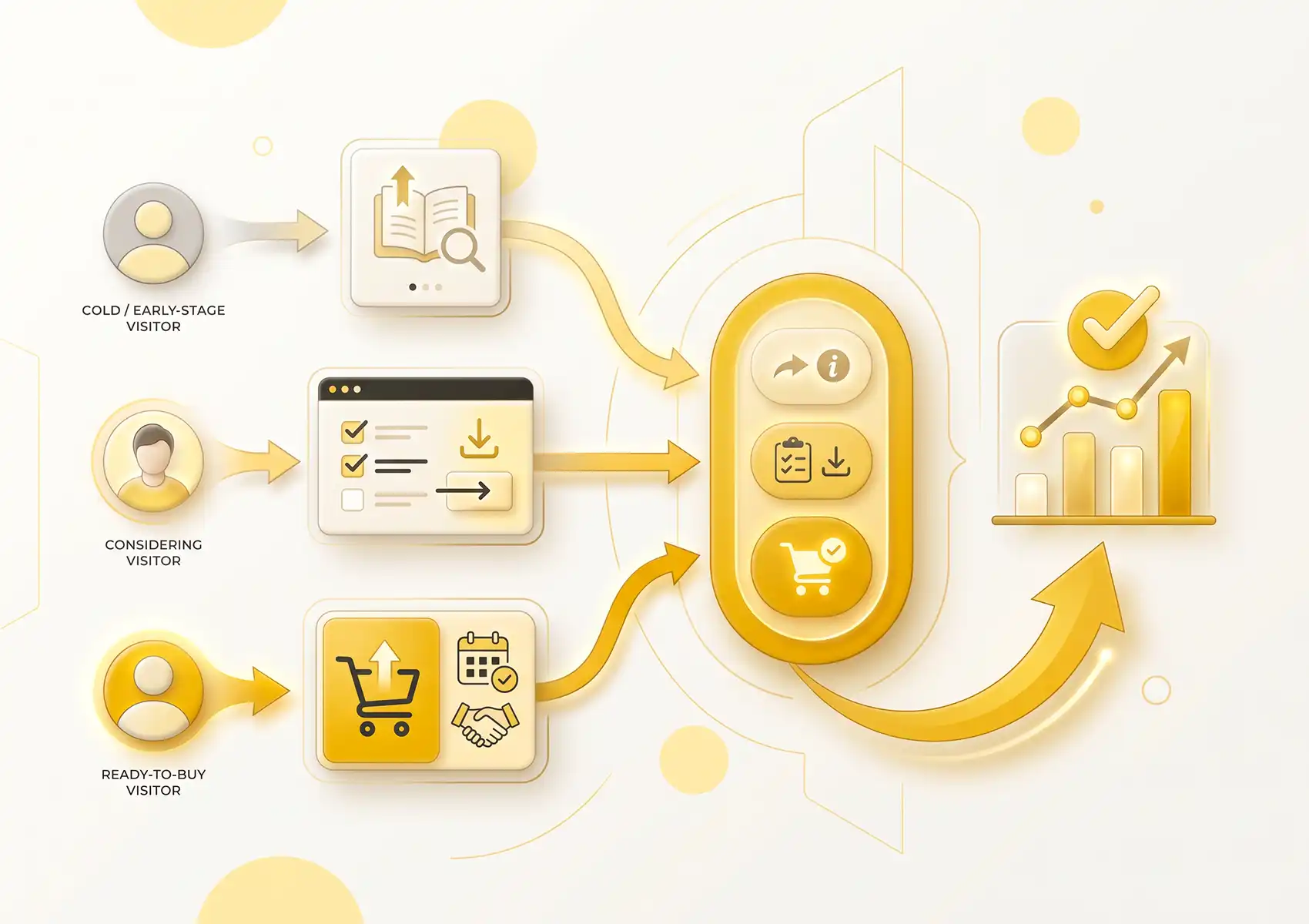
Plenty of businesses treat the call to action as an afterthought, a button tacked on at the end of a page, and then wonder why the conversion rate never moves. A call to action strategy is not one strong button. It is a sequence of prompts that work together to guide the reader towards a decision.
Without that structure, good traffic slips away. Visitors arrive, read, and leave because nothing gave them a clear reason to take the next step.
This guide shows how to build that strategy, starting with the reader and finishing with the numbers that tell you whether it works.
What Is a Call to Action
A strategy is built from individual calls to action, so it helps to pin down what one actually is.
A call to action is the prompt that asks a reader to take a specific next step, such as booking a call, downloading a guide, or making a purchase. On its own, a single prompt is just a request. It turns into a strategy once you decide which prompts to use, which readers see them, and in what order.
Map Your Call to Action to Buyer Intent
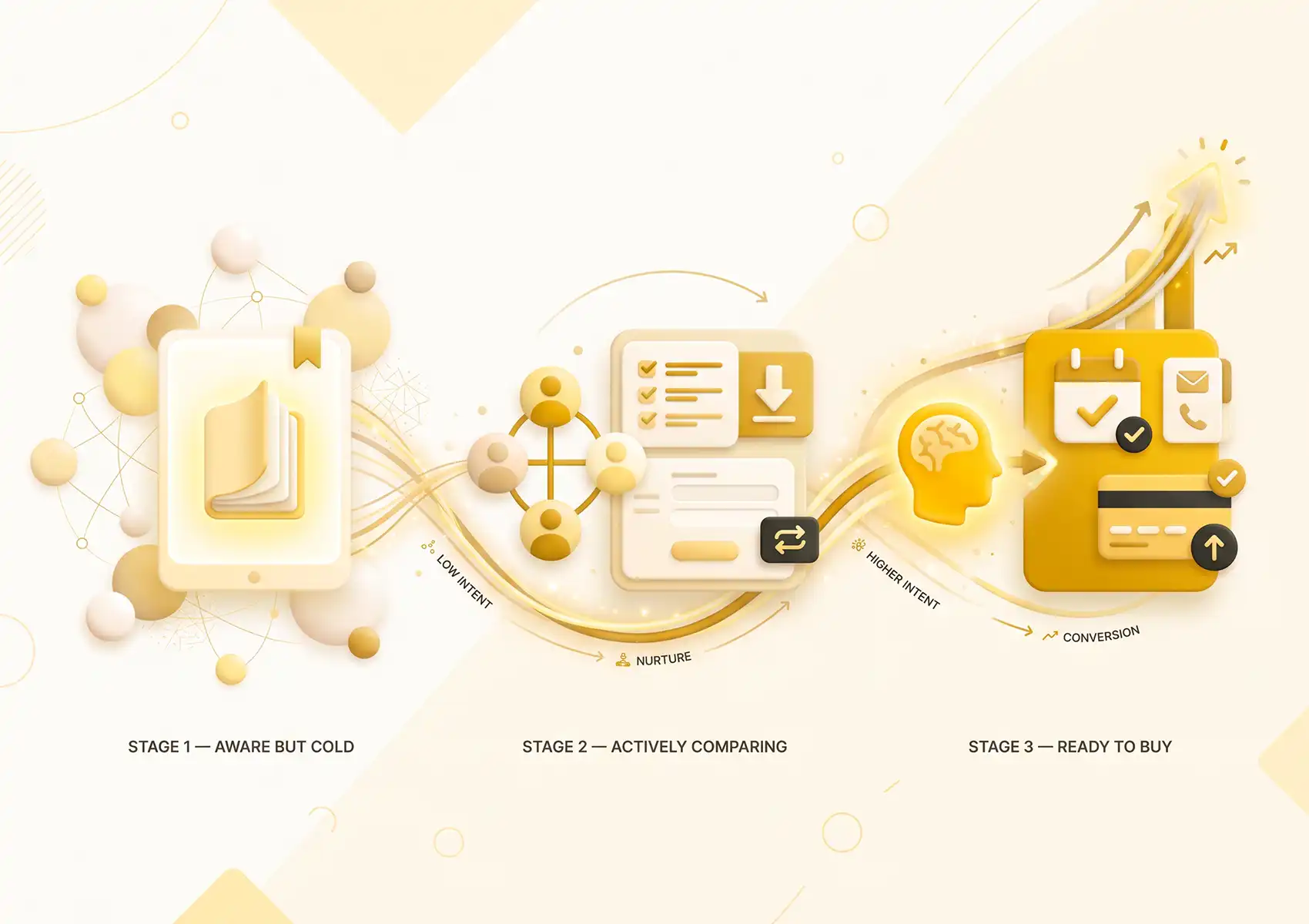
The same request does not suit every reader. A call to action strategy starts by matching the prompt to where the buyer sits in their journey, because a cold visitor and a ready buyer need very different invitations.
| Buyer Stage | Recommended CTA Type |
| Aware but not yet interested | Engagement or nurture, such as “Read the Guide” |
| Actively comparing options | Lead generation, such as “Download the Checklist” |
| Ready to buy | Direct conversion, such as “Book a Call” |
Push a cold reader straight to “Buy Now” and you tend to lose them, because you have asked for commitment before earning any trust. Offer that same reader a useful guide first, and they are more likely to say yes when you ask again later. Getting this match right gives every other improvement a better chance of working. The same thinking applies to paid social, where the choice between boosting a post and running a full Ads Manager campaign shapes how precisely you can reach each buyer stage.
What Makes Each Call to Action Convert
Once you know which prompt fits the reader, three things decide whether it works. The wording, its position on the page, and the competition around it are what separate a high-converting CTA from one that readers scroll straight past.
CTA Copy That Prompts a Decision
Good CTA copy tells the reader what they get for clicking. A button reading “Get My Free Audit” makes the value obvious, whilst a flat “Submit” tells them nothing. Specific, action-led wording gives people a reason to act rather than a task to complete.
CTA Placement That Matches Intent
CTA placement means putting the prompt where intent is highest, not only at the bottom of the page. On a longer page, repeat it as the reader builds interest, so the invitation appears when they are ready rather than after they have moved on. A lighter ask suits the top of the page, whilst the direct ask belongs at the point where the reader has seen enough to decide.
One Primary Action Per Page
Each page should be built around one main action. Repeating that same prompt down the page is fine, but placing a different request beside it splits attention and tends to reduce response. If you need a secondary option, such as a newsletter sign-up, keep it visually quieter so the main next step stays obvious.
Test and Refine Your Call to Action Strategy
A good strategy is not a one-off guess. It gets sharper each time you test it and act on what the numbers show.
Watch two figures above all. The click-through rate tells you whether the prompt earns a click, and the conversion rate tells you whether people complete the action once they arrive. A/B testing lets you compare two versions with real traffic, so the winner is based on evidence rather than opinion. Change one element at a time, such as the wording or the placement, and give each test enough traffic to be meaningful.
The case for tailoring your prompts is strong. HubSpot analysed more than 330,000 calls to action and found that personalised CTAs, tailored to the person viewing them, converted 202 per cent better than basic ones. Personalisation still relies on testing, though, because you only learn which message suits which reader by trying it.
Build a Call to Action Strategy That Converts With Gaia
Higher conversions start with knowing what to ask, and when. Let’s start with a conversation about how your call to action strategy can support your wider digital marketing and turn more of the right visitors into enquiries.


