

Plenty of hotels and resorts lean on online travel agencies and paid ads to fill rooms, then wonder why direct bookings stay flat. The searches that lead to a booking often happen in local search, which is precisely where local SEO for hotels earns its keep. If you have wondered what local SEO actually is, and whether it applies to a property like yours, this guide gives you a plain answer.
Local search is where a traveller chooses between you and the resort down the road. It is also where you either win a direct booking or lose it to a booking platform that takes a cut.
Here is what local SEO means, why it matters for hotels and resorts in particular, how it works, and the mistakes that quietly hold you back.
What Is Local SEO
Local SEO is the practice of improving how a business shows up in location-based search results, such as the map pack and “near me” queries. When someone searches with local intent, search engines try to surface the most relevant nearby options rather than a generic global list. That is the space local SEO competes in.
For any business tied to a physical place, this is where visibility turns into foot traffic, calls and reservations. The definition holds whether you run a café, a clinic or a coastal resort.
How Local SEO Differs From Standard SEO
Standard SEO is a fight for the classic blue links across the whole web. Local SEO competes in the map pack and the results tied to a searcher’s location, so proximity and place signals carry weight they do not have in ordinary search. A business can rank well locally without ranking for broad, non-local terms, and the reverse is also true.
What Local SEO Means for Hotel Brands
For a hotel, resort or restaurant, that general definition gets sharper. It means showing up when travellers search by city, neighbourhood or landmark, or add “near me” to the query, right as they decide where to stay or eat. A guest searching “boutique hotel near Seminyak” is not just browsing. They are close to a decision. Local SEO for hotels is about being the option they see and trust while they make it.
Why Local Search Matters for Hotels and Resorts
Visibility in local search is not a vanity metric. Done well, local SEO for hotels shapes the two things every operator cares about, occupancy and margin.
Capturing High-Intent Travel Searches
Location-based travel searches carry strong booking intent. Google reports that 76 per cent of people who search on their smartphones for something nearby visit a business within a day, a sign of how quickly a nearby search turns into a decision. For a hotel, ranking at that moment means reaching travellers who are ready to book rather than still shopping around.
Reducing Dependence on OTAs
Every booking won through your own local presence is one you do not hand to an online travel agency. Booking.com’s standard commission sits at around 15 per cent of the booking value, and Expedia often runs higher still. Each reservation you win directly protects your margin, not just your volume. Strong local search rankings give you a channel you own rather than one you rent from the OTAs.
How Local SEO Works for a Hotel Brand
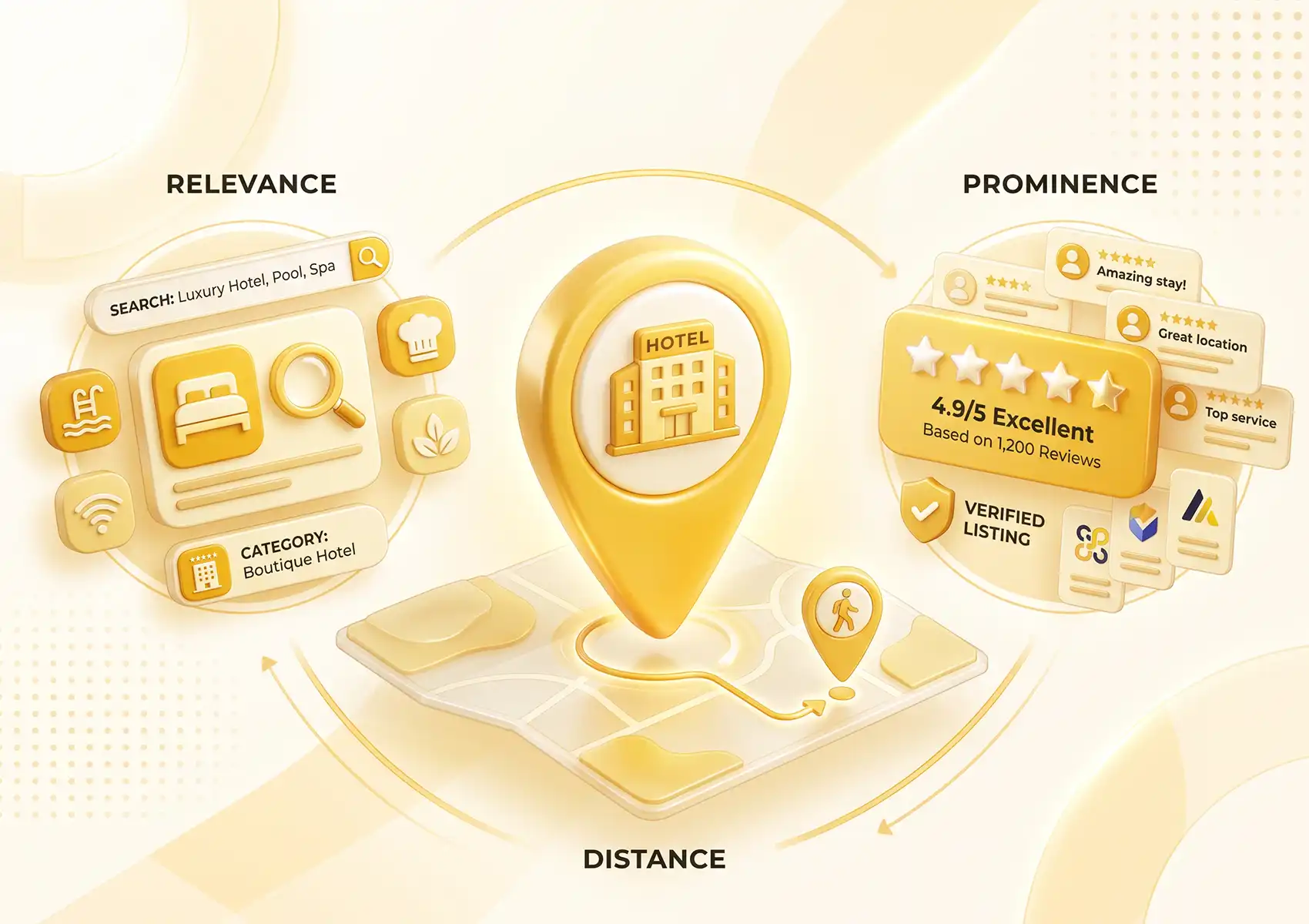
In practice, local SEO comes down to how search engines rank local results. Google explains that local results draw on three main factors, relevance, distance and prominence, and that a combination of the three decides the best match for a search. You cannot move your building closer to every traveller, but you can influence relevance and prominence, and that is where the work of improving your local search rankings sits.
Your Google Business Profile
A complete, active Google Business Profile is the foundation of showing up in local results for any property. Adding your categories, amenities, photos and accurate contact details helps Google understand what you offer and match you to the right searches. An abandoned profile is one of the quickest ways to lose ground you could easily hold.
Consistent NAP and Local Citations
Your name, address and phone number, often shortened to NAP, need to read the same everywhere they appear, from your Google Business Profile to booking directories and review sites. Inconsistent details confuse both search engines and guests, and that confusion chips away at trust. Consistent citations across reputable directories signal that your business is legitimate and established.
Reviews and Locally Relevant Content
Guest reviews and content tied to your surrounding area strengthen both prominence and relevance. Steady, genuine reviews show that guests can trust you, whilst destination content, such as guides to nearby beaches or events, tells search engines you belong to that place. Neither is a trick. Both are honest signals that build over time.
Local content does not stop at your website. The same destination storytelling carries over into social media marketing for hospitality brands, another channel travellers check before they book.
Local SEO Mistakes Hotel Brands Make
None of this works if a few common errors are undermining it. Across the industry, the same missteps surface again and again.
- Inconsistent NAP across booking sites and directories, which sends search engines mixed signals and weakens local search rankings before the real work even begins.
- Ignoring guest reviews, both the positive and the critical, when a visible response is a prominence signal and a trust cue for future guests.
- Thin or missing location pages that give search engines nothing to connect your hotel to its location or nearby landmarks.
- Treating local SEO as a one-off setup rather than ongoing work, when rankings shift and profiles need regular attention to stay competitive.
Build Your Hotel Local SEO Strategy With Gaia
Local SEO for hotels only pays off when it is built around your property and the bookings you actually want. Let’s start with a conversation about how local search could bring your hotel more direct bookings rather than another OTA commission.


