
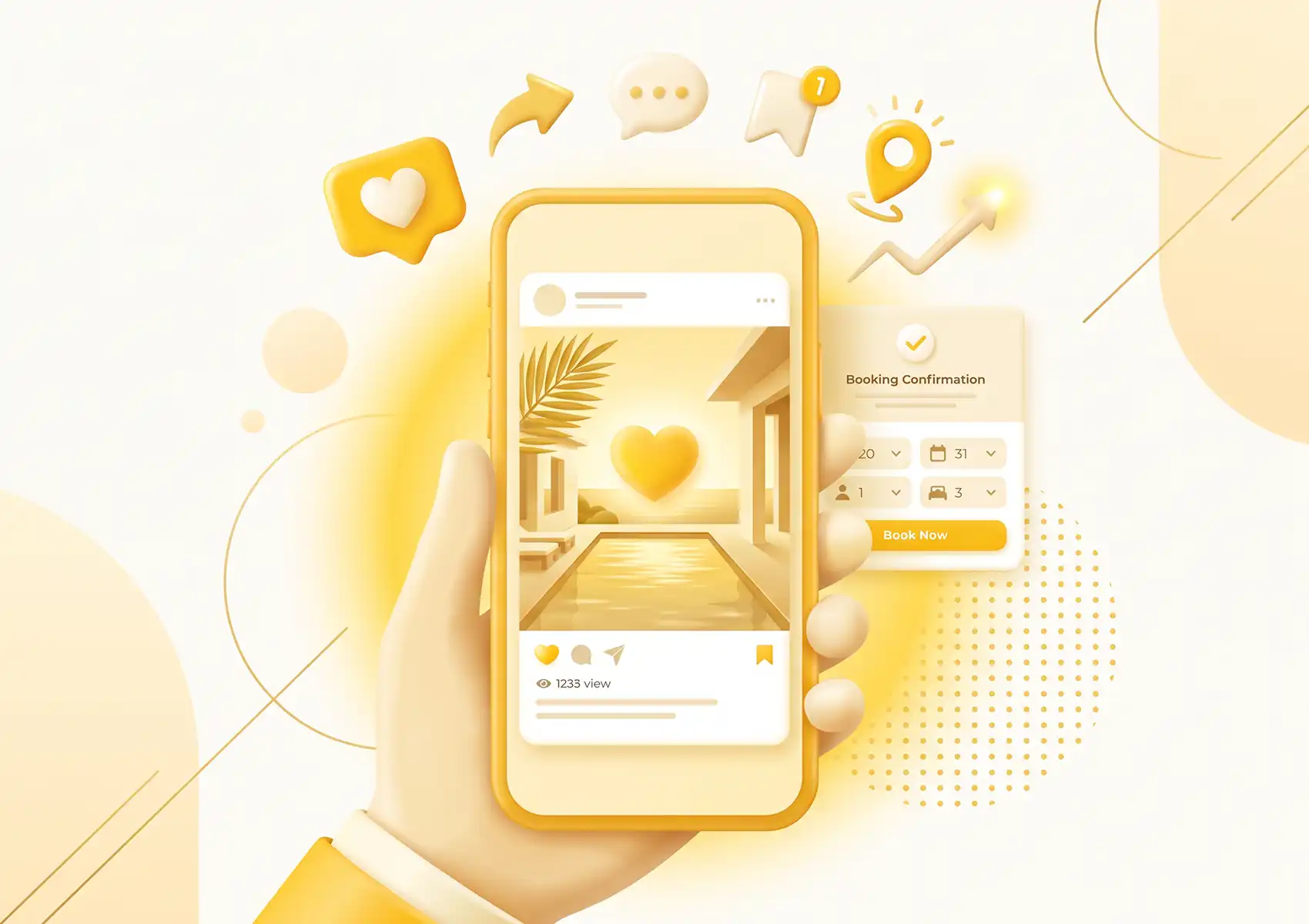
Today’s travellers research hotels, villas, and restaurants long before they reach a booking website, and social media in marketing has become central to how they choose. They scroll through Instagram, TikTok, Facebook, and YouTube, gathering inspiration from photos, videos, reviews, and recommendations.
For hospitality brands across Bali and South-East Asia, this makes hospitality social media marketing a core channel for building trust, attracting new guests, and generating bookings, not simply a place to share attractive images.
This guide explains why social media matters, what hospitality brands should post, and how to turn online engagement into measurable business results.
Why Social Media Now Decides Where Guests Stay and Eat
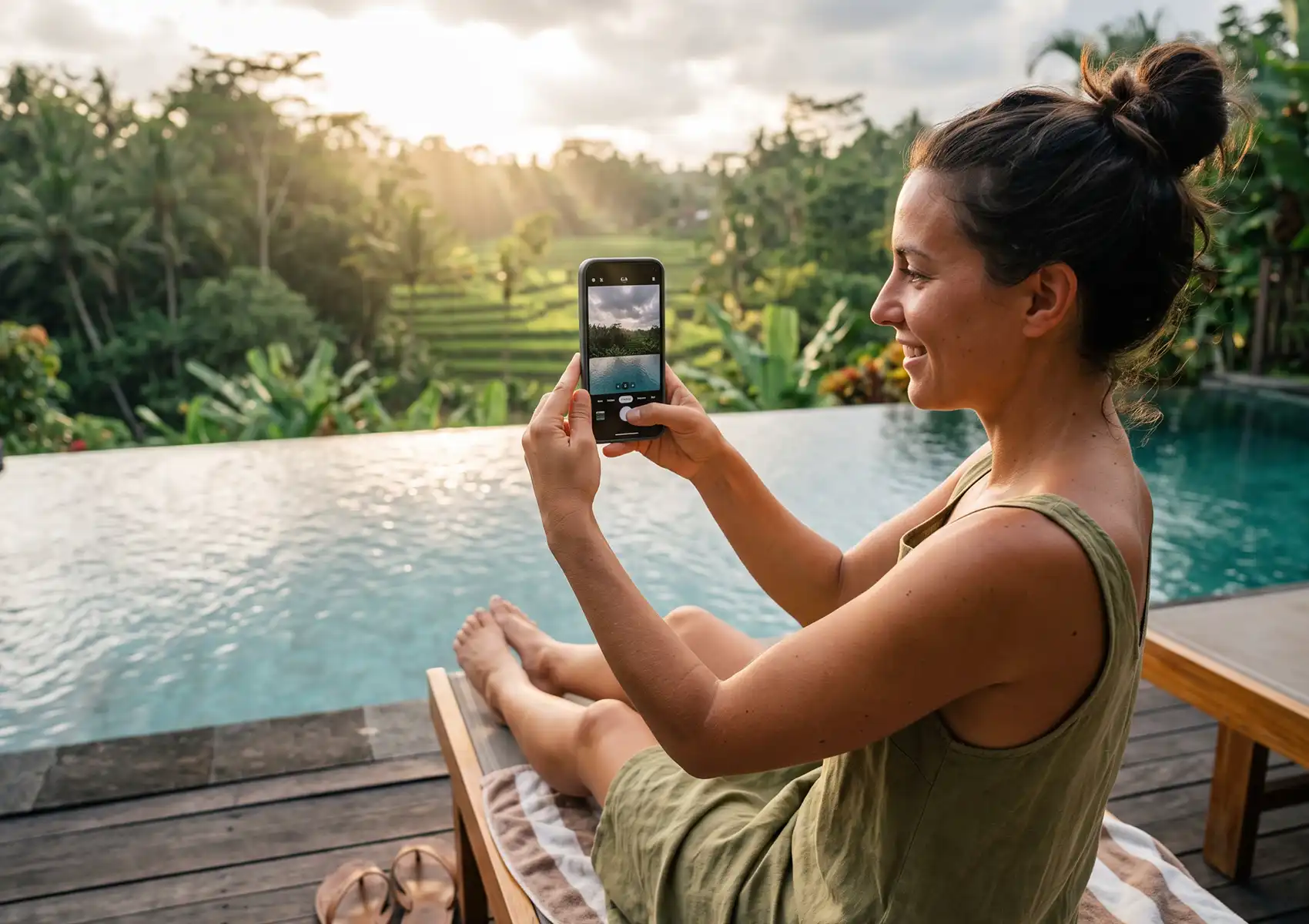
Travel decisions increasingly begin on a screen, long before a guest reaches a booking page. Understanding where that attention sits is the first step to earning a share of it.
Guests Research on Social Before They Book
Travellers increasingly rely on visual content when planning trips, with video playing a particularly influential role. According to research by Google and Kantar, more than half of travellers across Asia-Pacific watch travel-related videos during their decision-making process, while 41% specifically turn to YouTube.
Social content doesn’t just inspire. It also influences purchasing decisions. Research from Phocuswright found that 62% of social media users have chosen a destination or trip after seeing content on social platforms.
Australia and South-East Asia Live on Social
Bali attracts visitors from Australia and across South-East Asia, making these markets especially important for hospitality brands.
Australia was home to around 21 million social media identities by late 2025, whilst Indonesia recorded about 212 million internet users and roughly 143 million social media identities, according to DataReportal’s Digital 2025 reports with We Are Social and Meltwater. Together, these audiences represent millions of potential travellers researching their next holiday online.
The Problem With Posting Without a Plan
Social media is easy to start and hard to sustain, so it often ends up as an occasional photo feed rather than a planned channel. That is understandable when a property is busy, yet posting without a plan tends to burn effort and rarely moves the numbers that matter.
Pretty Pictures Are Not a Strategy
A stream of attractive photos with no goal behind it tends to gather passive likes and little else. Posting without a plan means no consistent story, no reason to follow, and no path towards a booking. The properties that stand out treat each post as part of a bigger picture rather than a one-off.
Reach Without a Path to Book Is Wasted
Reach on its own is temporary attention, and attention that leads nowhere is a missed booking. A viral Reel that does not tell people how to stay, eat, or enquire simply entertains and moves on. Every piece of content needs a job, and for a hospitality brand that job usually points towards a booking.
How to Use Social Media in Marketing for a Hospitality Brand

This is where social media in marketing earns its keep, by turning scattered posting into a system that supports real bookings. The steps below focus on what a hospitality brand controls.
Start With the Guest Journey, Not the Post
Guests move through several stages, from dreaming about a trip and comparing destinations to booking and eventually sharing their experience. Content performs best when it supports each stage of that journey rather than treating every post the same.
Show the Experience, Not Just the Property
Travellers rarely choose a hotel based on facilities alone. They book the experience those facilities promise. So the strongest content sells the experience around your property rather than only its features. A short video of a sunrise swim, a plated dish, or a quiet corner at golden hour does more than a list of amenities. Sell the moment first, and the room rate becomes easier to justify.
Let Guests Tell the Story
Guests trust other guests more than they trust a brand, which makes user-generated content and reviews some of the most persuasive material you have. Resharing real guest photos, tags, and reviews adds credibility that professionally produced brand content cannot match on its own. Inviting guests to share and asking permission to repost turn happy visitors into a steady content source.
Give Every Post a Clear Next Step
Attention is only useful if the viewer knows what to do with it, so every post should make the next step obvious. A link to book, a prompt to message, or a clear profile that leads to your website all turn a viewer into an enquiry. A simple test is whether someone who enjoys your content can find your booking page within a few taps.
The comparison below outlines what tends to drive bookings and what tends to stall them.
| Drives bookings | Stalls growth |
| Authentic short-form videos | Static promotional images |
| Guest-generated content | Only professionally produced content |
| Clear booking or enquiry links | No obvious next step |
| Consistent content strategy | Irregular posting |
Fitting Social Into the Rest of Your Marketing
Social works best as a single, connected part of how a property is found and booked, not as a silo. Where it sits alongside search, your website, and your booking channels shapes how much it contributes.
Connect Social to Search and Your Website
Most travellers don’t book immediately after discovering a property on social media. Instead, they search for reviews, visit the website, compare prices, and check availability.
Social media creates awareness, while your website and search presence convert that interest into bookings.
Localise for Bali and South-East Asia
For brands operating in Bali and across South-East Asia, language, local references, seasonality, and the platforms guests actually use all shape what works. Content built for one market rarely transfers cleanly to another. Through our work with hospitality, restaurant, lifestyle, and travel businesses across Bali and South-East Asia, we’ve consistently found that localisation often determines whether content resonates with the right audience.
How to Measure Whether Social Is Working
Followers and likes feel reassuring but do not fill rooms, so the goal is to connect social activity to bookings and enquiries. Clear measurement also shows what to make more of.
Track Bookings and Enquiries, Not Vanity Metrics
The metrics that matter most are link clicks, direct messages, saved and shared posts, and the enquiries and bookings that follow. Connecting social activity to those outcomes is what turns a feed from a content showcase into a channel you can defend with data. Follower count is a headline, not a result.
Watch What Guests Respond To
High reach is valuable only when it attracts the right audience. Rather than focusing solely on likes, monitor which posts generate saves, shares, direct messages, and enquiries. Those signals show which stories to tell more often and which to retire. Letting real guest responses guide the content keeps the effort focused on bookings.
Putting Social Media to Work for Your Property
Used strategically, social media in marketing helps hospitality brands attract the right travellers, build trust before a booking is made, and convert online attention into measurable business results.
Success isn’t about posting more content. It’s about creating the right content, delivering it consistently, and connecting every post to a clear business objective.
Let’s start with a conversation about how social media in marketing can turn online attention into real bookings for your property rather than passive likes. Email us at info@gaiada.com or message us on WhatsApp to get in touch.


